Lithium Energy has been focusing on creating its own brand and contributing to a greener home.

Contacts:
Luna Hu
Mobile + WhatsApp:
+86 18856579905
+852 91232004
Email:
cxhu@ecolto.com
CTO: Morley.lee@ecolto.com

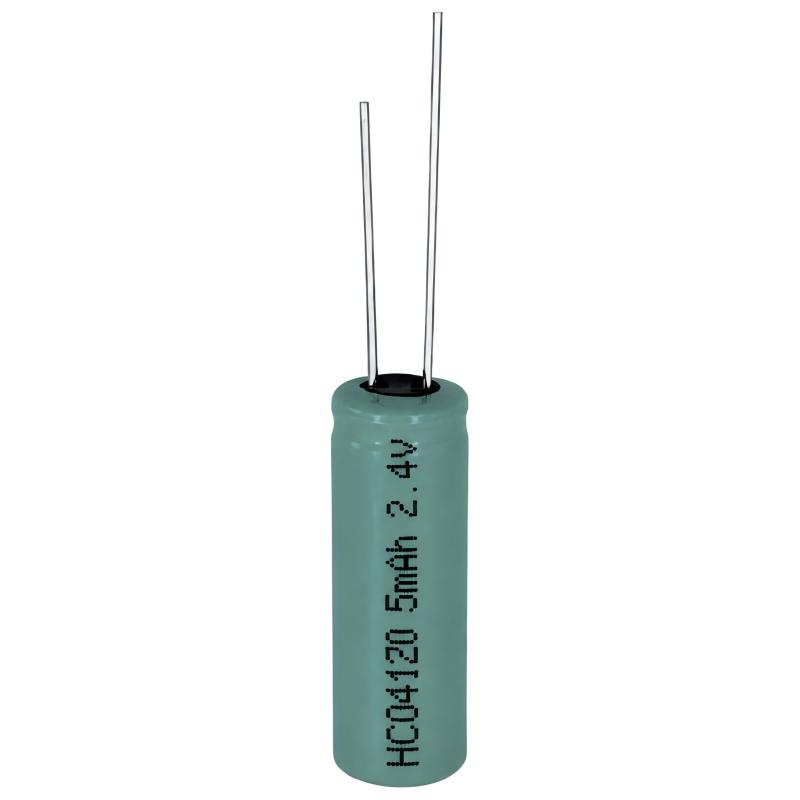
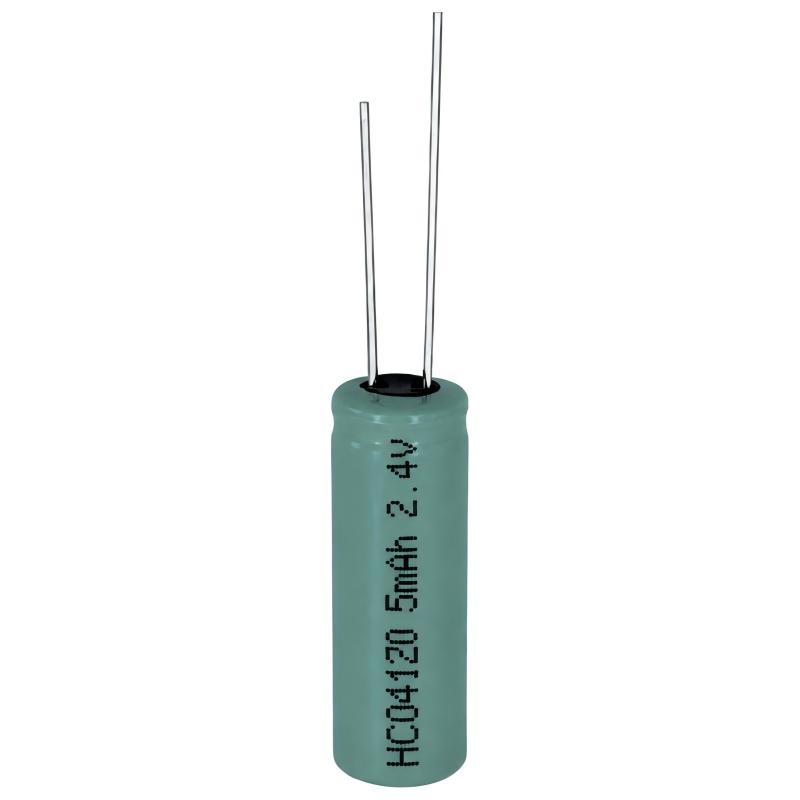
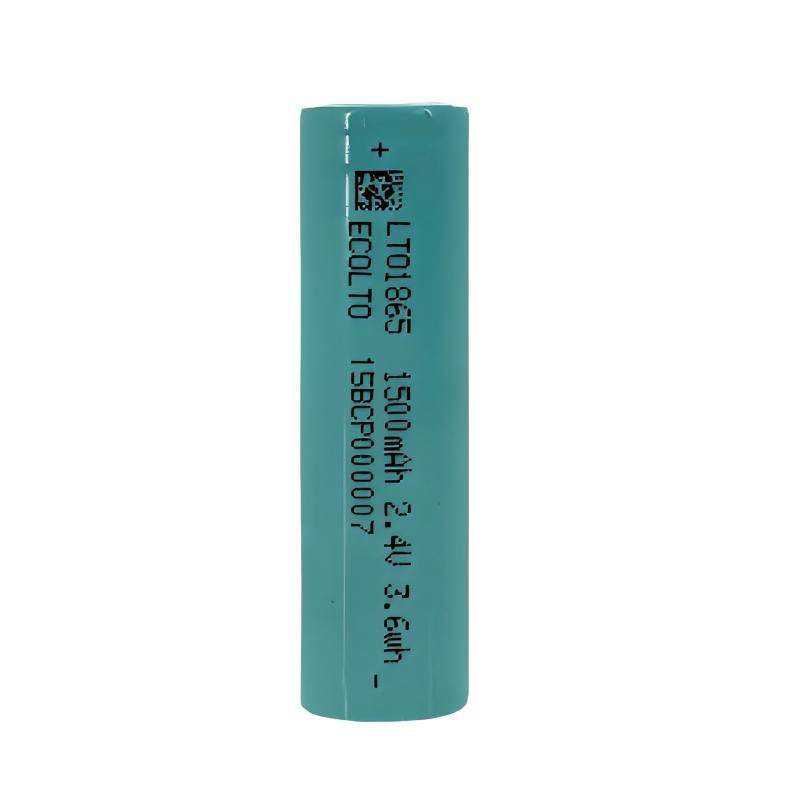
The LTO10450-180 is a high-performance, 2.4V cylindrical Lithium Titanate (LTO) cell engineered to deliver exceptional power density in an ultra-compact 10450 form factor. Designed for demanding industrial and commercial applications, this micro-powerhouse supports intensive 20C continuous charge and discharge rates (3.6A), making it ideal for rapid-cycling environments.
Utilizing advanced LTO chemistry, the cell offers an industry-leading lifespan of 10,000 cycles (at $\ge$80% capacity retention) and outstanding thermal resilience, operating reliably in extreme temperatures ranging from -40°C to 70°C. Built with safety as a core priority, the LTO10450-180 inherently eliminates the risks of thermal runaway, successfully passing stringent nail penetration, crush, and short-circuit testing without fire or explosion.
Enhanced Technical Structure: Styled key specifications like 20C continuous charge/discharge and 10,000 cycles in bold to instantly catch an engineer's eye.
Refined Vocabulary: Replaced informal phrases like "punches well above its weight" and "tiny powerhouse" with more professional B2B terminology ("high-performance," "micro-powerhouse," and "engineered to deliver exceptional power density").
Improved Clarity on Safety: Rephrased the safety section to highlight that the cell inherently eliminates thermal runaway risks while keeping the explicit mention of the abuse tests passed.
| Item | Condition | |||||||||||
| Temperature | 25±5℃ | |||||||||||
| Relative humidity | 15%-90% | |||||||||||
| Atmospheric pressure | 86kPa~106kPa | |||||||||||
| Height above sea level | ≤ 4000m | |||||||||||
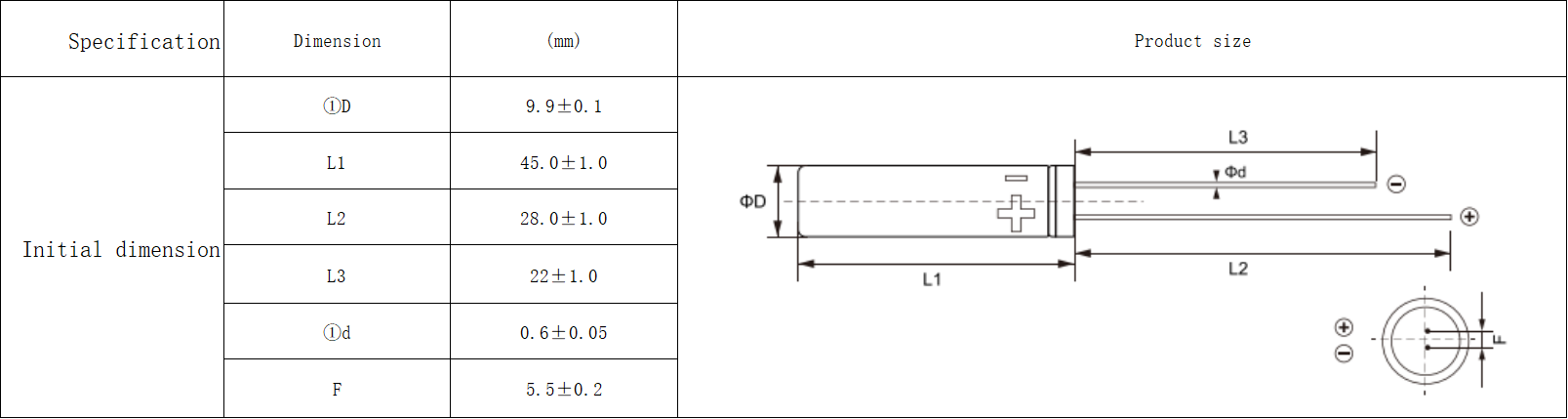
| No. | Item | Condition | NOTE | |||||||||||||||
| 1 | Appearance | Consistent with appearance inspection standard | There should be no such defects as flaws, cracks, rust, leakage, which may depreciate the commercial value of the cell. | |||||||||||||||
| 2 | Nominal capacity | 180mAh | 1C room temperature≥180mAh | |||||||||||||||
| 3 | Nominal voltage | 2.4V | 1C discharge average voltage at room temperature | |||||||||||||||
| 4 | Internal impedance | ≤200mΩ | Internal resistance measured at AC 1kHz after 30%~50 % charged at room temperature. | |||||||||||||||
| 5 | Standard charge cut-off voltage | 2.8V | / | |||||||||||||||
| 6 | Standard discharge cut-off voltage | 1.0V | / | |||||||||||||||
| 7 | Maximum continuous charge current | 20C(3.6A) | 25±5℃ | |||||||||||||||
| 8 | Maximum continuous discharge current | 20C(3.6A) | 25±5℃ | |||||||||||||||
| 9 | Temperature rise during 5C charging | ≤20℃ | / | |||||||||||||||
| 10 | Operating temperature range | Temperature:40℃ to 100℃ Humidity:≤85%RH | Recommended charge/discharge current:≤0.5C. When the cell temperature is below 0℃, it is recommended to reduce discharge power or stop charging/discharging. When the cell temperature exceeds 50℃, appropriate thermal management is recommended. | |||||||||||||||
| 11 | Storage temperature range | -20℃ to 35℃ | Recommended storage temperature:25±3℃; ≤90% RH Relative Humidity | |||||||||||||||
| 12
| Weight | ≤6g | / | |||||||||||||||
| No. | Item | Test method | Criteria | |||||||||||||||
| 1 | Cycle life | Under a standard test environment, a cell is charged in accordance with 3.1.3, rests for 30 minutes, and then discharged in accordance with 3.1.4, rests for 30 minutes before the next charge-discharge cycle. The cell shall be continuously charged and discharged for 10,000 cycles. | Capacity retention ≥80% after 10,000 cycles | |||||||||||||||
| 2 | High temperature cycle life | A cell is stored at an ambient temperature of 45±2℃ for 60 min. Then, at 45±2℃, a cell is charged to the standard charge cut-off voltage at a constant current of 1C, followed by constant voltage charging until current ≤0.05C; charging is terminated. Rest for 5 min and then discharge to the standard discharge cut-off voltage at a constant current of 1C, rest for 5 minutes before the next charge-discharge cycle. The test shall be repeated for 2,000 cycles. | Discharge capacity ≥80% of initial capacity after 2000 cycles | |||||||||||||||
| No. | Item | Test method | Criteria | |||||||||||||||
| 3 | Rate charge performance | Under a standard test environment, a cell is discharged in accordance with 3.1.4, rests for 10 minutes, and then is charged to the standard charge cut-off voltage at a constant current of 5C, followed by constant voltage charging until current ≤0.05C, and charging is terminated. Calculate the ratio of charge capacity (%) | Charge capacity≥95% of initial capacity with 5C | |||||||||||||||
| 4 | Rate discharge performance | Under a standard test environment, a cell is charged in accordance with 3.1.3, rests for 10 minutes, and then discharged to standard cut-off voltage at a constant current of 5C. Calculate the ratio of discharge capacity(%). Under a standard test environment, a cell is charged in accordance with 3.1.3, rests for 10 minutes, and then discharged to the standard cut-off voltage at a constant current of 5C. Calculate the ratio of discharge capacity(%). | Discharge capacity≥95% of initial capacity with 5C | |||||||||||||||
| 5 | Discharge capacity at 60℃ | A cell is charged in accordance with 3.1.3 and stored at an ambient temperature of 70±2℃ for 5±0.5 h and then discharged to the standard discharge cut-off voltage at a constant current of 1C. Calculate the ratio of discharge capacity(%). | Discharge capacity≥98% of initial capacity at 70±2℃ | |||||||||||||||
| 6 | Extreme low-temperature charge performance | A cell is discharged in accordance with 3.1.4 and stored at an ambient temperature of -20±2℃ and -40±2℃ for 6h and then charged to standard charge cut-off voltage at a constant current of 1C, followed by constant voltage charging until current ≤0.05C. Calculate the ratio of charge capacity (%). | Charge capacity ≥85%of initial capacity at -20℃Charge capacity ≥70%of initial capacity at -40℃ | |||||||||||||||
| 7 | Extreme low-temperature discharge performance | A cell is charged in accordance with 3.1.3 and stored at ambient temperatures of-20±2℃ and-40±2℃ for 6h and then discharged to standard discharge cutoff voltage at a constant current of 1C. Calculate the ratio of discharge capacity (%). | Discharge capacity≥85% of initial capacity at -20℃Discharge capacity ≥60%of initial capacity at-40℃ | |||||||||||||||
| 8 | Retention capability and capacity recovery at room temperature | A cell is charged in accordance with 3.1.3, stored in an ambient temperature of 25±5℃ for 28 days, then discharged in accordance with 3.1.4. Calculate the ratio of discharge capacity(%). Charged in accordance with 3.1.3, rested for 10 minutes, and then discharged in accordance with 3.1.4. Calculate the ratio of discharge capacity (%) | The residual capacity is not less than 90%of the initial capacity, and the recoverable capacity is not less than 95%of the initial capacity at room temperature temperature. | |||||||||||||||
| 9 | Retention Capability and Capacity Recovery at 60℃ | A cell is charged in accordance with 3.1.3 and stored at an ambient temperature of 60±2℃ for 7 days, then discharged to standard discharge cut-off voltage at a constant current of 1C. Calculate the ratio of discharge capacity(%). And charged to standard charge cut-off voltage at a constant current of 1C, followed by constant voltage charging until current ≤0.05C, rested for 10 minutes, and then discharged to standard discharge cut-off voltage at a constant current of 1C. Calculate the ratio of discharge capacity(%). | The residual capacity is not less than 90%of the initial capacity, and the recoverable capacity is not less than 95% of the initial capacity at 55℃ | |||||||||||||||
The ultra-compact 10450 form factor makes this LTO cell an ideal micro-power solution for space-constrained, high-reliability applications where traditional lithium batteries fail due to cycle limits or temperature extremes.
Wearables & Medical Devices: Ideal for smart jewelry, wearable health monitors, medical patches, and portable clinical instruments that require rapid recharging and absolute safety.
IoT & Smart Sensors: Engineered for industrial Internet of Things (IoT) sensors, environmental tracking nodes, and edge computing devices that frequently wake up, transmit via high-power wireless protocols, and return to sleep.
Wireless Communication Modules: Provide robust peak-current support for RF, Bluetooth, LoRa, Cellular, and Zigbee transmissions.
Memory Backup & RTC Power: Delivers dependable, maintenance-free backup power for critical electronics, industrial control systems, and automotive sub-systems.
To ensure maximum performance, longevity, and safety, adhere to the following operational guidelines:
State of Charge (SOC): Maintain the cells at an optimal 10% to 30% SOC during prolonged storage.
Environment: Store in a clean, dry, and well-ventilated room at an ambient temperature between -5°C and 28°C with a relative humidity of ≤ 85% RH.
Maintenance: Perform a maintenance cycle (recharge/discharge) every 6 months to prevent over-discharge damage from self-discharge.
Shipping: Cells are shipped at approximately 30% SOC in compliance with international transport standards.
Electrical Safety: Avoid external short circuits and strictly observe the positive (+) and negative (-) polarity markings. Do not mix cells of different capacities, brands, or states of charge.
Thermal Management: Do not overheat the cell during soldering or assembly. Ensure appropriate thermal mitigation if continuous operational temperatures exceed 50°C.
Mechanical Integrity: Protect cells from crushing, piercing, dropping, or any form of physical abuse that could compromise the cylindrical casing.



Q1: Do you provide free samples?
A: Yes, a few pieces of free samples can be provided, but freight will be charged.
Q2: What is the warranty period for this product?
A: We provide a 1-year warranty from the date of purchase.
Q3: What are your payment terms?
A: We currently accept payments via T/T (Telegraphic Transfer) and L/C (Letter of Credit).
Q4: Do you accept OEM or ODM orders?
A: Yes, we do. We can print your custom logo on the products and provide tailored design solutions for your specialized battery packs or capacitor modules.
Q5: What is your monthly production capacity?
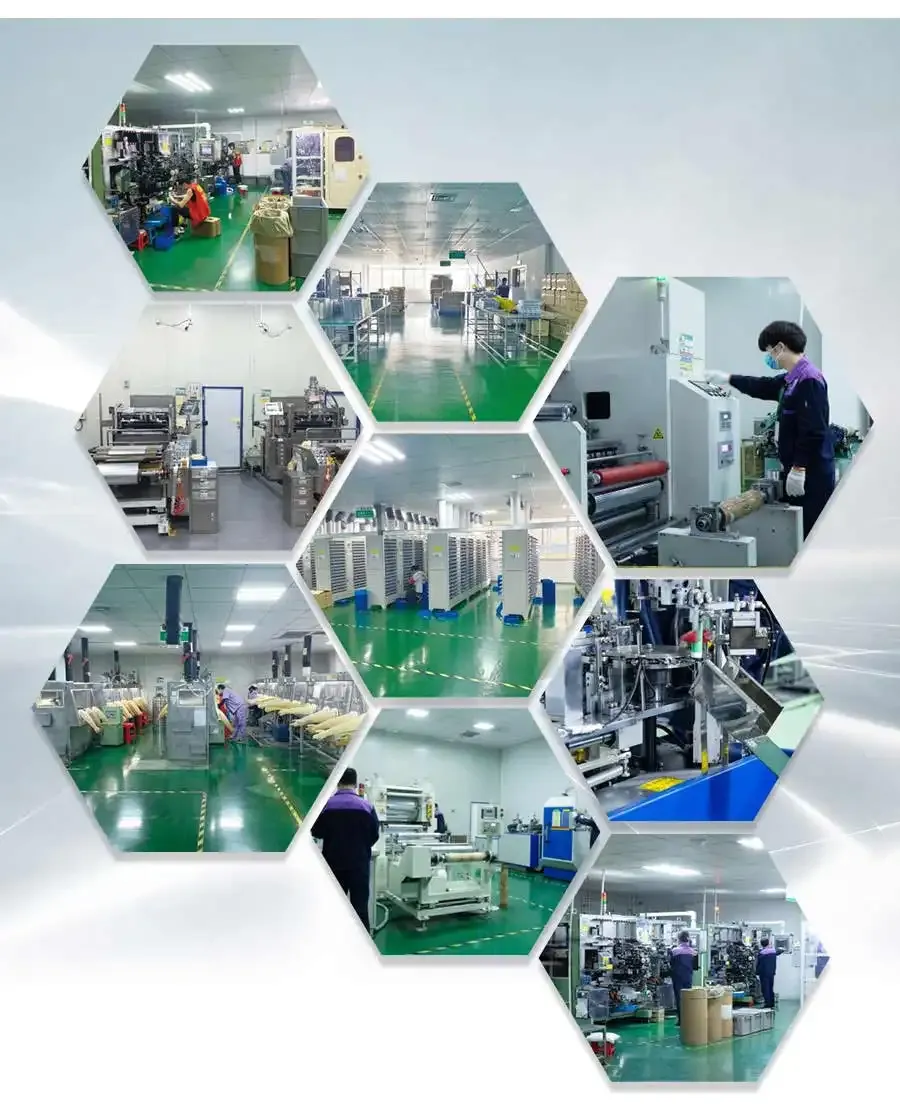
A: Our current production capacity is 1.8 million cells per month, ensuring a stable and reliable supply for large-scale orders.
Q6: What are your shipping and transportation methods?
A: We primarily ship orders by sea for bulk volumes. However, we can also arrange air freight or express delivery (such as DHL, FedEx, or UPS) depending on your urgency, order size, and destination.
Q7: What certifications do your products have?
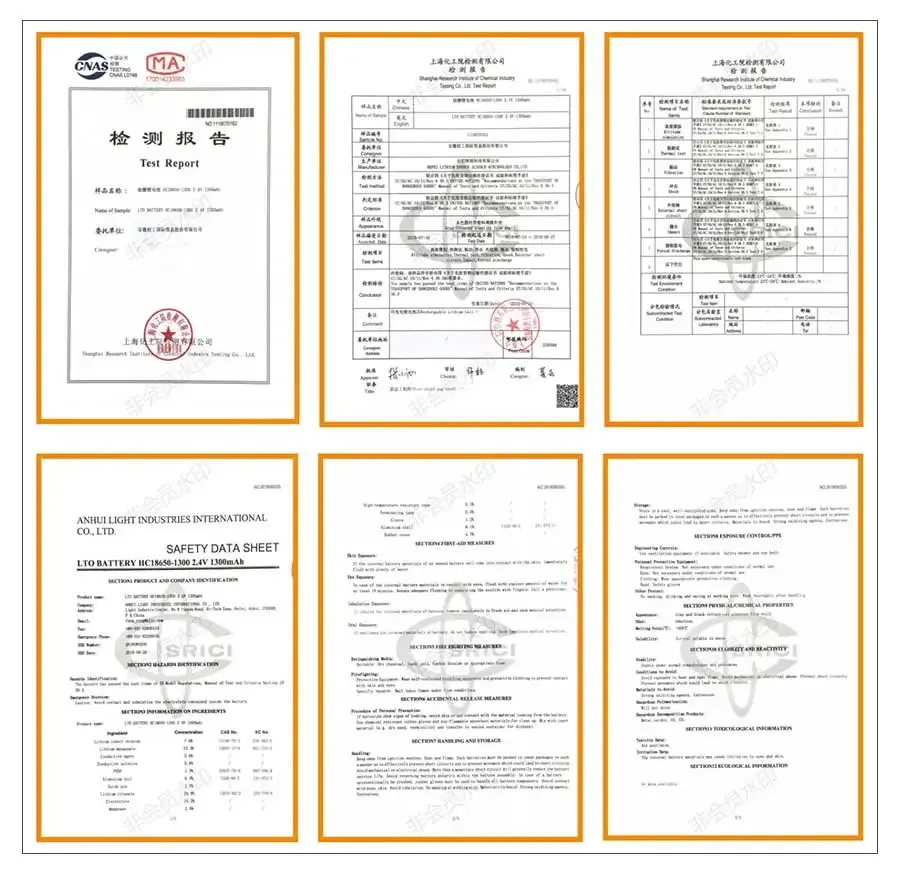
A: We have obtained UN38.3, MSDS, and other relevant international certifications to ensure safe transportation and usage.
Fill out our short form, and we will contact you shortly to discuss how we can provide a solution to your needs!
This site is protected by wp-copyrightpro.com