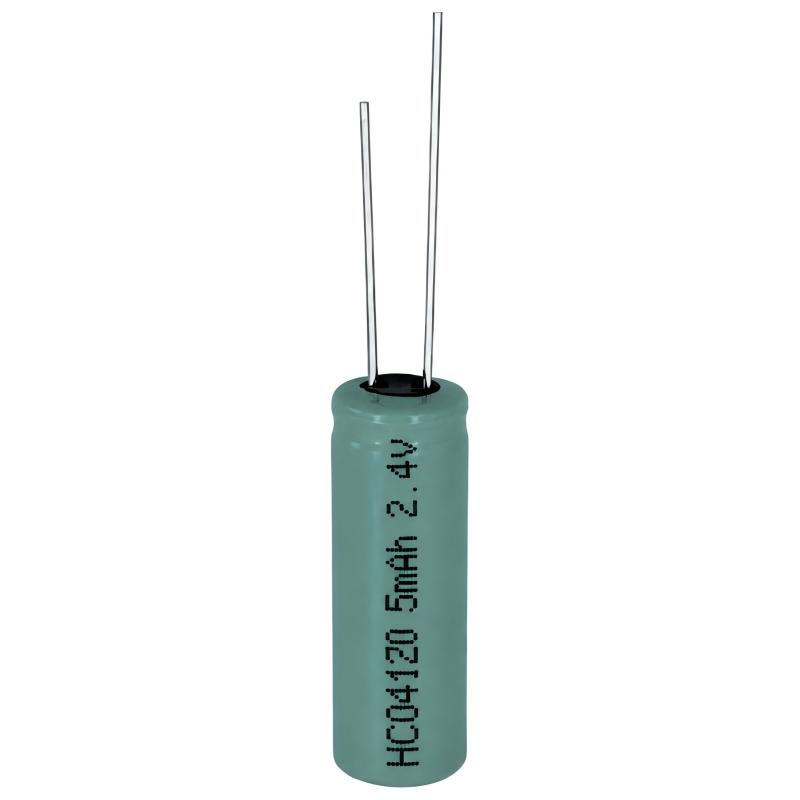
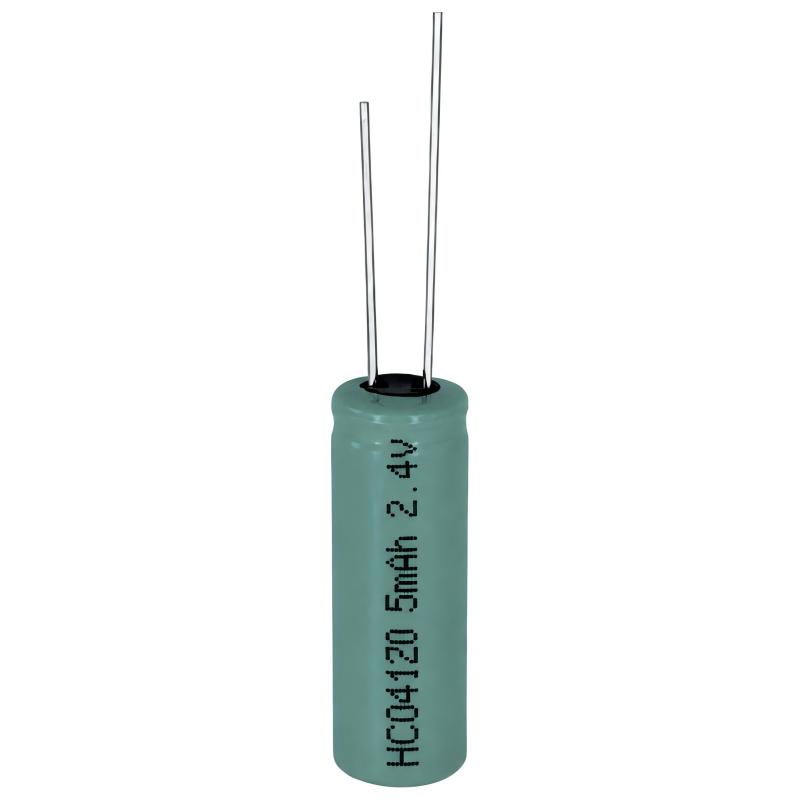
Ecolto Energy has been focusing on creating its own brand and contributing to a greener home.

Contacts:
Luna Hu
Mobile + WhatsApp:
+86 18856579905
+852 91232004
Email:
cxhu@ecolto.com
CTO: Morley.lee@ecolto.com
Scope
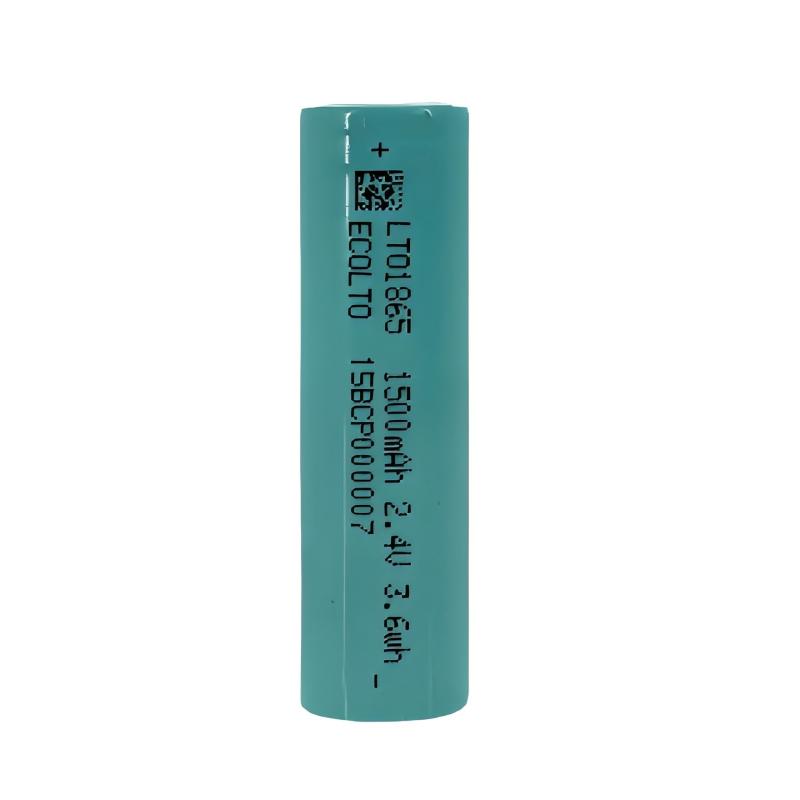
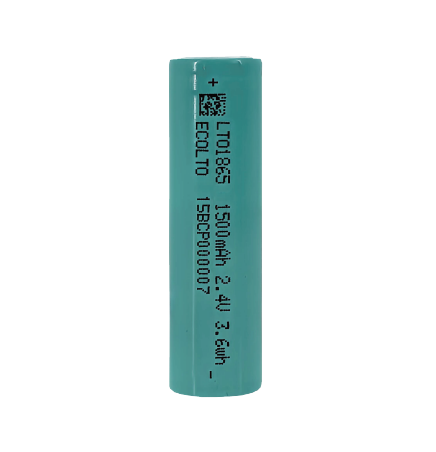
This specification describes the Lithium Titanate Cell's basic parameters, electrochemical characteristics, reliability and its test method, decisioncritera., instructions, safety specifications, safety procedures, quality evaluation, packaging, storage, and transportation etc. The specifcation isapplied to the HC18650-1500mAh Lithium Titanate Cell manufactured by ECOLTO ENERGY
Description
Product model: HC18650-1500mAh Lithium Titanate Cell
Test should be conducted with new cells within 30 days after shipment from our factory and which is not cycled more than fifty times before the test
Unless otherwise specified, all tests stated in this Product Specification are conducted at below condition:
The room temperature mentioned in this product specification is 25±5°C
| No. | Item | Condition | NOTE |
| 1 | Appearance | Consistent with the appearance inspection standard | There should be no such defects as fiaw, crack, rust, leakage, which may depreciate the commercial value of the cell. |
| 2 | Nominal capacity | 1500mAh | 1C room temperature≥1500mAh |
| 3 | Nominal voltage | 2.4V | 1C discharge average voltage at room temperature |
| 4 | Internal impedance | ≤20mΩ | Internal resistance measured at AC 1kHz after 30%- 50% charge at room temperature. |
| 5 | Standard charge cut-off voltage | 2.8V | / |
| 6 | Standard discharge cut-off voltage | 1.5V | / |
| 7 | Maximum continuous charge current | 3C (4 .5A) | 25±5℃ |
| 8 | Maximum continuous discharge current | 5C (7 .5A) | 25±5℃ |
| 9 | Temperature rise during 3C charging | ≤20℃ | / |
|
10 |
Operating temperature range | Humidity: ≤85%RH Temperature: -40℃ to 60℃ | Recommended charge/discharge current: ≤0.5C. When the cell temperature is below 0°C, it is recommended to reduce discharge power or stop charging/discharging. When the cell temperature exceeds 50°C, appropriate thermal management is recommended. |
| 11 | Storage temperature range | -40℃ to 35℃ | Recommended storage temperature: 25±3℃; ≤90%RH Relative Humidity |
| 12 | Weight | ≤44g | / |
| NO. | Item | Test method | Ctiteria |
| 1 | Cycle life | Under standard test environment, a cell is charged inaccordance with 3.1.3, rest 30 minutes, and then discharged in accordance with 3.1.4, rest 30 minutes prior to next charge-discharge cycle. The cell shall be continuously charged and discharged for 15,000 cycles | Capacity retention >80% after 15,000 cycles |
| 2 | High temperature cycle life | A cell is stored in an ambient temperature of 45+2°C for 60min. Then at 45+2°C, a cell is charged to the standard charge cut-off voltage at a constant current of 1C, followed byconstant voltage charging until current <0.05C, charging is terminated.Rest 10 min and then discharged to the standard discharge cut-off voltage at a constant current of 1C, rest for10 minutes prior to the next charge-discharge cycle. The testshall be repeated for 3,000 cycles. | Discharge Capacity > 80% of initial capacity after 3000 cycles |
| 3 | Rate charge performance | Under standard test environment,a cell is discharged in accordance with 3.1.4,rest 10 minutes, and then is charged tothe standard charge cut-off voltage at a constant current of 3C,followed by constant voltage charging until current <0.05C,charging is terminated. Calculate the ratio of charge capacity (%). | Charge capacity > 95% of initial capacity with 5C |
| 4 | Rate discharge performance | Under standard test environment, a cell is charged in accordance with 3.1.3, rest 10 minutes, and then dischargedto standard cut-off voltage at a constant current of 5C.Calculate the ratio of discharge capacity (%).Under standardtest environment, a cell is charged in accordance with 3.1.3,rest 10 minutes, and then discharged to standard cut-offvoltage at a constant current of 5C. Calculate the ratio of discharge capacity (%). | Discharge capacity > 95% of initial capacity with 5C |
| 5 | Discharge capacity at 60°C | A cell is charged in accordance with 3.1.3 and stored in an ambient temperature of 60±2°C for 5±0.5 h and then discharged to the standard discharge cut-off voltage at a constant current of 1C.Calculate the ratio of discharge capacity (%). | Discharge capacity > 98% of initial capacity at 60°C |
| 6 | Extreme low temperature charge performance | A cell is discharged in accordance with 3.1.4, and stored in an ambient temperature of -20+2°C and -40±2°C for 6h and then charged to standard charge cut-off voltage at a constant current of 1C, followed by constant voltage charging until current≤0.05C. Calculate the ratio of charge capacity (%). | Charge capacity >85% of initial capacity at-20°CCharge capacity >60% of initial capacity at-40°C |
| 7 | Extreme low temperature discharge performance | A cell is charged in accordance with 3.1.3 and stored at ambient temperatures of -20±2°C and -40±2°C for 6h and then discharged tostandard discharge cut-off voltage at a constant current of 1C.Calculate the ratio of discharge capacity (%). | Discharge capacity > 82% of initial capacity at-20°CDischarge capacity > 60% of initial capacity at-40°C |
| 8 | Retention capability and capacity recovery at roomtemperature | A cell is charged in accordance with 3.1.3, stored in an ambient temperature of 25±5°C for 28 days, then discharged in accordancewith 3.1.4. Calculate the ratio of discharge capacity (%). Charged in accordance with 3.1.3, rested for 10 minutes, and then discharged inaccordance with 3.1.4. Calculate the ratio of discharge capacity (%). | The residual capacity is not less than 90% of the initial capacity, and therecoverable capacity is not less than95% of the initial capacity at room temperature. |
| 9 | Retention Capability and Capacity Recovery at 60°C | A cell is charged in accordance with 3.1.3, and stored in an ambienttemperature of 60±2°C for 7 days, then discharged to standard discharge cut-off voltage at a constant current of 1C.Calculate theratio of discharge capacity (%).And charged to standard chargecut-off voltage at a constant current of 1C, followed by constant voltage charging until current <0.05C, rested for 10 minutes, andthen discharged to standard discharge cut-off voltage at a constantcurrent of 1C. Calculate the ratio of discharge capacity (%). | The residual capacity is not less than 90% of the initial capacity, and the recoverable capacity is not less than 95% of the initial capacity at 60°C |
The waranty perod for this product is 12 months from the manufacturing date. ECOLTo ENERGY wil provide replacement for cells wth manufacturing defects confirmed to be caused by the manufacturing process. ECOLTO ENERGY shall not be responsible for replacement in cases of misuse,abuse, or improper handling.
Storage
The cellshall be stored in the clean and dry ventlation room at the recommended temperature of 5° Cto 28° Cand shallbe keptout of fire or heatand avoid exposure to corrosive substances. The cllshould be stored at 10%-30% SOC. We recommend that cells should be charged about every six months to prevent over-discharge.
Shipment requirement
The cels shall be packed in cartons and shipped at approximately 30% SOC. During transportation, the recommended storage temperature is -5°Cto 28°C. Excessive vibration, impact or compression shall be avoided during transportation. Exposure to direct sunlight and rain shall be avoidedduring transportation. The cells may be transported by road, rail, sea, or air.
Other chemical reactions
Because lithium titanate cells rely on electrochemical reactions, cell performance wildeteriorate over time even if stored for extended periodswithout use. In addition, if charging, discharging or ambient temperature conditions are not maintained within the specified ranges the lifeexpectancy of the cell may be shortened or the device in which the cellis used may be damaged due to electrolyte leakage. If the cells cannotmaintain charge for extended periods of time, even if they are charged correctly, the cells may require replacement.
Remark
Any other items which are not covered in this specification shall be agreed by both sides.
This site is protected by wp-copyrightpro.com